


Winners of the Syli d’Or World Music Competition
SINCE 2007
The complete showcase of winners of the world music competition presented by Productions Nuits d’Afrique.
Watch or listen to each winner, then tap “Learn more” to see their profile.

LEARN MORE
Born in Montreal in 2024, Zalam Kao is the result of the meeting of five artists whose influences are as vast as they are eclectic. A reflection of the city’s cultural diversity, the group embodies a lively, contemporary vision of world music. Above all united by friendship, Zalam Kao cultivates the art of collective creation. The quintet brings together Clovis Lamarre (Tchobis), producer, mixer and guitarist; Antonio Dorsaint Manigat (Ogou Rayfé), singer and rapper; MoMo, multi-instrumentalist and singer from a jazz background; Lucas Melo, guitarist, double bassist and lyricist; and Edaï Larobina, singer-songwriter and instrumentalist. Their first single, “Tout pour toi” (2024), stands out as a luminous, unifying anthem. In October 2025, Zalam Kao unveiled its first album, “Tou Lumin,” a sun-drenched work interweaving jazz, funk, soul and world beat, asserting the group’s bold musical signature.

LEARN MORE
Born in Montreal, Tamboréal Samba Bloco is a percussion collective that celebrates Afro-Brazilian rhythms and the cultural diversity of the city. Made up of musicians from a variety of backgrounds, the group turns sound into a space for meeting and celebration, combining tradition, creation and contagious energy. Inspired by the beats of samba, maracatu, ijexá and other Afro-Brazilian rhythms, Tamboréal creates a unique sonic signature, a fusion between the warmth of Brazil and the urban pulse of Quebec. The project goes beyond music: it is an affirmation of community, belonging and collective joy. The group has performed on several major stages and at cultural events in Montreal and Quebec, including the Festival Nuits d’Afrique in front of more than 5,000 people, the Festival Islande Fête, and the Montreal Beer Festival. In 2025, Tamboréal was also a semi-finalist in the Syli d’Or competition, underscoring its originality and its striking presence on Montreal’s music scene. More than a musical group, Tamboréal Samba Bloco is a cultural movement that makes rhythm a gesture of union between North and South, between past and present, between all the people who find in percussion the same beating heart.

LEARN MORE
Carried by the burning energy of raï and the timeless elegance of Algerian music, Bastin Band shapes a resolutely modern sound where the Maghreb meets the grooves of the world. Their universe, at the crossroads of funk, soul and traditional rhythms, creates a vibrant fusion that brings together dance, emotion and identity. Through a haunted voice, charged with nostalgia and power, the group makes stories of uprooting, celebration and freedom resonate. Desert-scented guitars, deep basses, hybrid percussion and blazing brass make up a sonic mosaic that transports as much as it gathers. On stage, Bastin Band displays a magnetic presence: a raw, warm, generous energy. Each song becomes a journey, a bridge stretched between the Mediterranean and international stages, between ancestral heritage and cosmopolitan modernity.
LEARN MORE
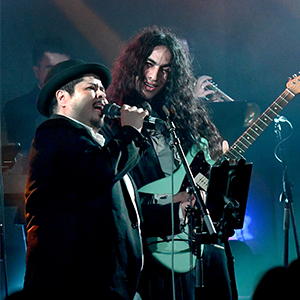
MARZOS, founded in 2019, is an ensemble passionate about salsa and Latin American music. Blending salsa classics with traditional rhythms, it brings a modern, energetic touch to every performance. Made up of experienced musicians, the group performs in concerts and festivals, while also organizing events and workshops to promote Latin American music and support emerging artists.
LEARN MORE
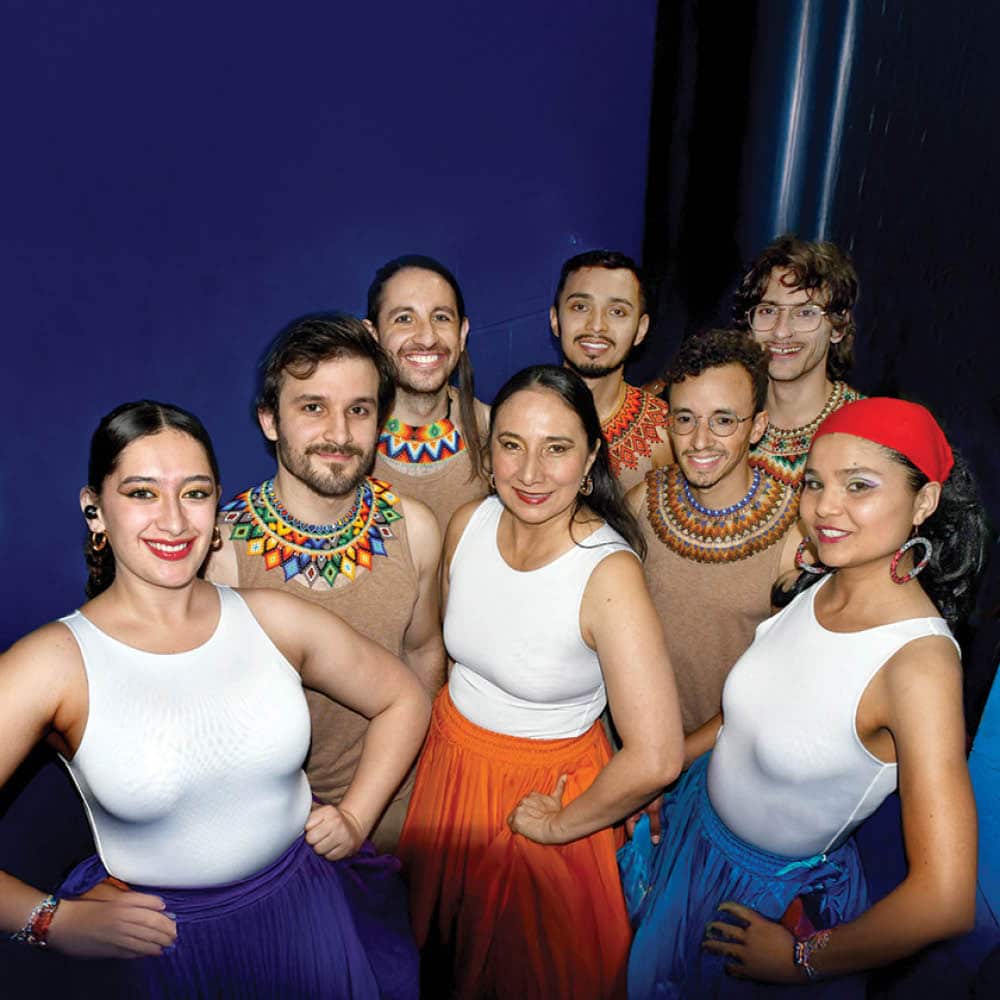
Founded in 2023, Raíz Viva is a group that celebrates the fusion of Afro-Colombian music and culture with Quebec, Canadian and Latin American communities. Their mission is to create spaces for expression and awareness of the realities of Latin America. By integrating Afro-Colombian rhythms, a blend of African drums, Indigenous instruments and European influence, Raíz Viva offers a vibrant music that echoes this rich diversity. The name “Raíz Viva” (living root) symbolizes their desire to reconnect with ancestral roots while helping musical traditions evolve. Based in Canada, a multicultural country, the group is enriched by encounters with other musical styles, which in turn enrich their creations. Their first album includes rhythms from Colombia’s Atlantic coast, as well as a reinterpretation of the Brazilian song Magalenha, fused with the Chalupa, a rhythm from the coast.
LEARN MORE
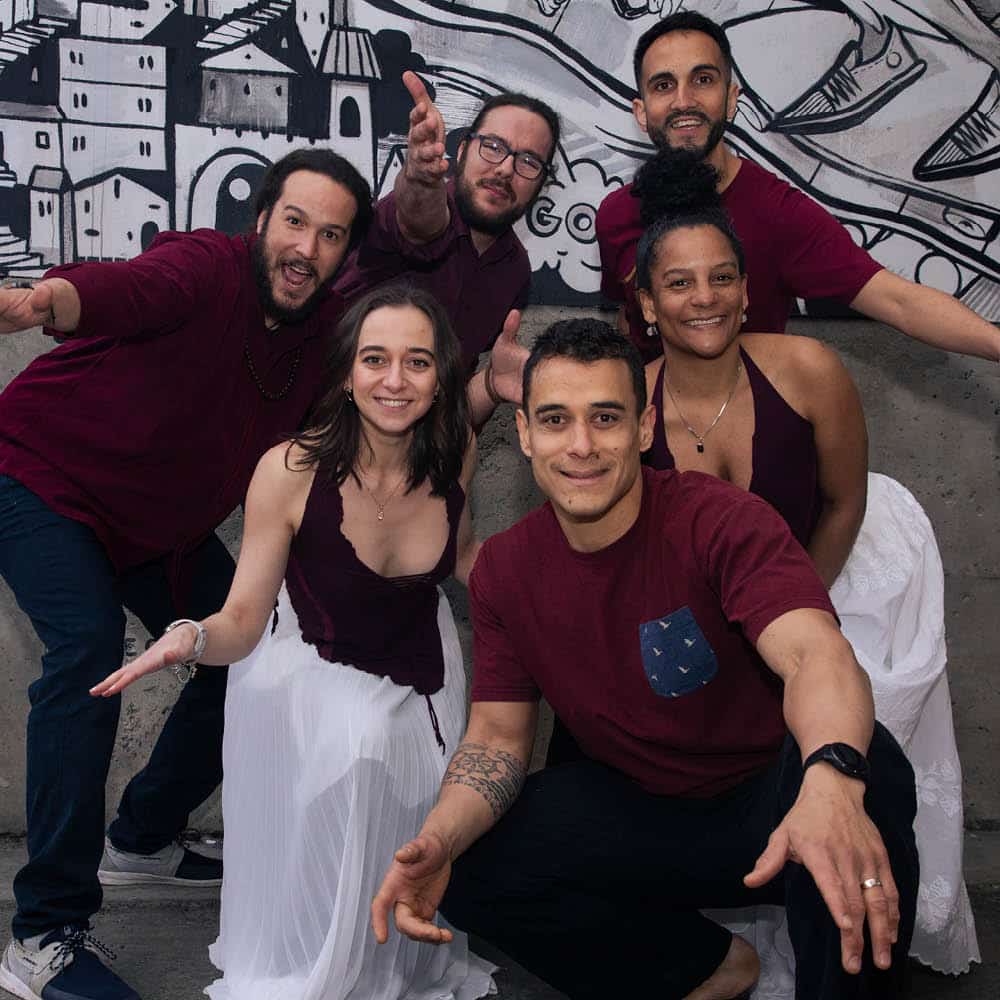
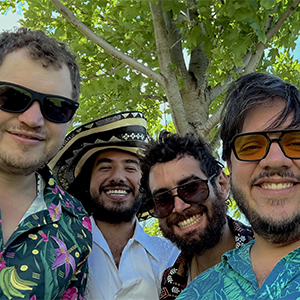
Born from a desire to introduce Quebec, and Canada more broadly, to maloya, the group Kozé was built with lovers of this music. Maloya is a transcendental music of connection and sharing, and that is what the group Kozé wants to convey. Kozé means “to speak, to communicate” in Réunion Creole, and it is through its lyrics and songs that the group conveys its message and values. Maloya is not like other music: it combines percussion and singing, a beautiful way to make the voices of its chorus resonate with the drums and other instruments native to Réunion Island, such as the roulèr, the kayamb and the sati. Discover Kozé’s maloya, a sweet blend of the traditional and the modern.
LEARN MORE
Less Toches is the musical collision of five explosive characters, an unexpected and refreshing big bang of cumbia on the island of Montréal. The eternal magic of the troubadour peasants of the South takes on a poetic, passionate and fun air here: Less Toches takes its name from a Latin American bird and a Colombian expression meaning “clumsy.”
Humour and flight translate into a fresh, deep interpretation of the rural, riverside spirit of cumbia and accordion music. Their Colombian, Mexican, Cuban and Argentinian origins come together to revive rhythms that marked their childhoods through folk tradition: the continental cumbia of Montréal!
LEARN MORE
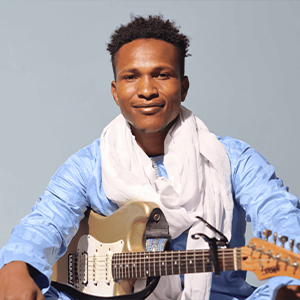
Since 2012, Boubé has taken part in various international tours as a drummer and/or guitarist for the artist Bombino and also for the group Mdou Moctar.
In 2023, Boubé recorded his first album, titled Issaktan, in Niger. He then presented his project in Paris, and his journey has continued in Montréal since July 2023. His music speaks of peace and friendship and always inspires travel. In it, we discover Tuareg values and wisdom through sounds that are at times bluesy and at times more meditative.
LEARN MORE
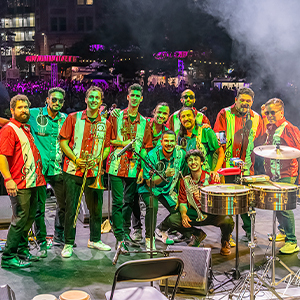
Immerse yourself in the immersive experience of an artistic fusion, where the spellbinding rhythms of the Afro-Cuban tradition blend harmoniously with the melodic richness of Middle Eastern music. This musical marriage, marked by a unique sophistication, transcends borders and offers an unmatched sonic experience.
Their musical performance is a display of virtuosity, capturing the audience’s attention with contagious energy and remarkable technical mastery.
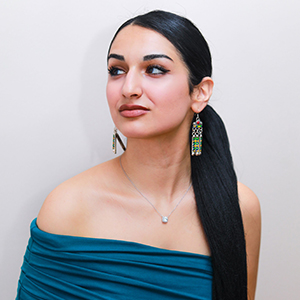
The founder, Shahrzad Sabzehali, is driven by an innovative and ambitious artistic vision, seeking to create a harmonious fusion between Afro-Cuban and Middle Eastern musical traditions. Her artistic approach rests on innovation, experimentation, communicative energy, emotional resonance, social and cultural engagement, and the pursuit of artistic excellence. She aspires to transcend cultural boundaries, celebrate diversity and create an unforgettable musical experience for the audience.
LEARN MORE
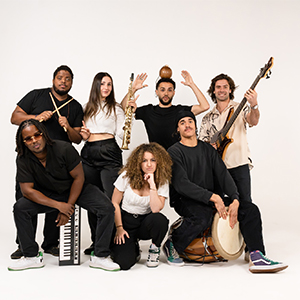
La Tribu Salsa Band was born from the communion of several Latin rhythms they are passionate about, chiefly the Salsa Brava style. La Tribu Salsa Band made its debut by taking part in several small-scale concerts. Their goals are to share their instruments on stages with greater renown and to contribute to Montreal’s international profile by attracting fans of Afro-Latin music.
LEARN MORE
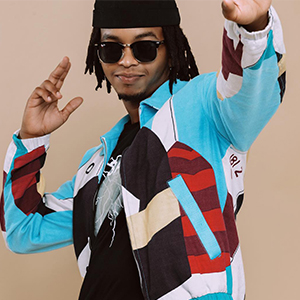
Abondance is an electro-Caribbean project that aims to be unifying, multicultural and accessible to all. The artistic concept blends the sounds of the “islands” with the sounds of the “city,” by bringing electro-specific sounds into Antillean music and, conversely, adding Antillean rhythms and colours to electronic music. This musical project tells the story of anyone who has left their rural life to settle in a new urban environment until reaching abundance there. “Our influences are many, but we can single out Patrick Saint Éloi, Eugène Mona, Kaytranada, Lane8, Darius and Disclosure.” The style oscillates between traditional Antillean music such as Zouk, Gwo Ka and Carnival, and blends with House, Pop, Dance/Electronic and even funk.
LEARN MORE
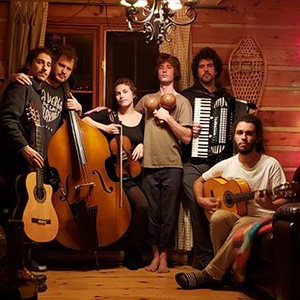
Originally from Burundi, Karagira Owen Berel, better known as “LIL K HPB,” is a young rapper and singer-songwriter. In 2015, when he moved to Rwanda, he formed “HPB” with T-Point. In 2018, he released his very first single: Seen. In 2019, he launched his first EP of 7 tracks: Game of songs. In 2020, he presented his first album Confusing Solutions and moved to Montréal for his solo career. His track LaLa, which appeared in 2021, is the best-known song in his discography. He is one of the most promising young talents in the East African diaspora’s music industry in Canada.
LEARN MORE
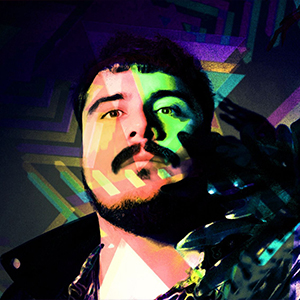
If the sirocco is a scorching, fiery wind that blows the red sand of the Sahara northward, this artistic group likewise breathes a musical aesthetic from the South into the Montreal scene. Syroko draws its primary inspiration from the rich tradition of Algerian Chaabi, a generous musical source that colours the group’s melodic and rhythmic foundation. What is chaabi? It is called the jazz of the Casbah, a fruit born of the meeting between classical Arab-Andalusian music and the poetic heritage of the Maghreb. The alchemy between these two traditions, one musical, the other literary, has given rise to a lively and ambitious style of performance. Its universal reach was expressed through the popularization of the famous song Ya Rayah, which Syroko performs in its shows. Substantially driven by a spirit of fusion and eclecticism, Syroko lays claim to this legacy, which it dares to revisit and redefine endlessly. The plural colours that infuse its musicality give meaning to a story born of encounters with others. That is why the worlds of rumba, jazz, bolero and cumbia leave their mark on the group’s versatile identity. And in keeping with its state of mind, the group sits at the crossroads of melancholy romances, politically engaged lyrics and burlesque songs. As long as the heart is in it, Syroko will sing the intoxication of love, indignation at the world and the comedy of life’s ups and downs. Armed with their guitars, violin and accordion, double bass and percussion, the seven members of Syroko revisit and compose, as inspiration takes them, works in Arabic, Spanish and French.
LEARN MORE
Papish is the musical project of Osvaldo Felipe-Aguirre, a Montreal-based singer, songwriter and music producer of Chilean origin. Through songs combining Spanish, English and French, his music explores various rhythms and textures among Tropical Latin Pop, Electronic, Disco, Cumbia electronica and more. Papish, nicknamed for his eclectic, colourful energy and his stage-animal presence, transports us to this current and growing Latin musical fusion. His first single Alzar la voz sin reclamar (“raising your voice without complaining”) gives us a glimpse of a new soundscape, representing the new Montreal Latinx generation on the international stage.
LEARN MORE
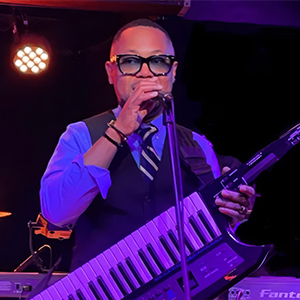
Congolese rumba and soukous are on the bill with Blaise Labamba. Blaise Labamba leads his band with a master’s hand, through rhythmic breaks that give no respite, long flights of syncopated chords and improvisations in which keyboards and guitars hold a dialogue. Congolese rumba and soukous in the purest tradition! Born in Congo-Kinshasa, then still called Zaire, to a pianist father and a choir-singer mother, and growing up in a world where African music was in full effervescence, Blaise Bamba Muana Manzo taught himself piano, guitar and percussion. In 1990, he formed his first band in his neighbourhood, Tout-Chic-Gombé. Between 1993 and 1995, Blaise studied music at the Institut National des Arts in Kinshasa, then joined the band of one of the Congolese stars of the day, Général Defao, and his “Big Stars.” A series of international tours followed; Blaise played with great names of African music and criss-crossed the continent. In 1999, he settled in Montreal, and made his place on the Canadian scene by accompanying various bands on stage. With hundreds of concerts under his belt, Blaise Labamba struck out on his own. In 2018, he created a band called Kotakoli, with which he asserts his tastes and desires, skilfully blending Congolese zouk rumba and soukous with a blazing energy. As on his live album Personnalité, Blaise Labamba establishes himself as a master of Congolese dance, in the true Kinshasa style!
LEARN MORE
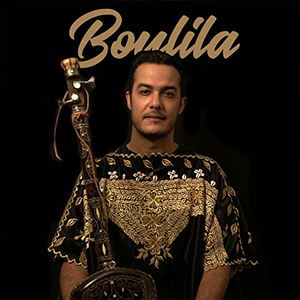
Boulila is a quartet that plays Gnawa fusion from Morocco, inspired by great gnawa masters such as Mustapha Bakbou and Hmida Boussou. Their concert will take you on a journey through African sounds in a mystical atmosphere. Discover the mystical sound of the guembri and the trance rhythms of the krakebs!
LEARN MORE
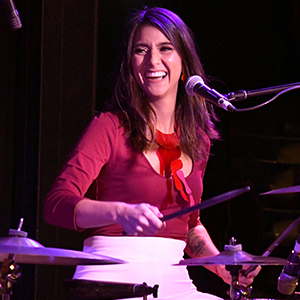
Brazilian multi-instrumentalist and educator Lara Klaus explores different combinations of percussion, from drums to various African instruments, along with guitar and vocals. Lara’s compositions are the result of a partnership with Brazilian composers and are mainly influenced by the music of northeastern Brazil, American soul music and Afro-Latin music. The project began in 2016 and her first album, “Força do Gesto,” was released in 2018. Lara Klaus has taken part in major music festivals around the world, such as the Montreux Jazz Festival in Switzerland and the Samba Festival in Germany, and performs regularly in Brazil and abroad.

LEARN MORE
KWALITI is a social group with the essence of afro-pop and a Caribbean influence, where all cultures can be in relation.
LEARN MORE
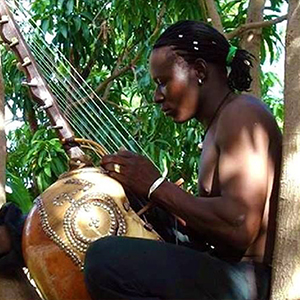
Mamoutou Dembélé, known as “EMDE,” was born and raised in music. Originally from Sikasso in Mali, he began at the age of 6, self-taught. Born to griot parents, who are the inspiration of traditional Malian music, music is a rich family cultural heritage passed down from generation to generation. A descendant of the Bwa (or Bobo), an ethnic group of Mali, he fuses the Bwa language with Bambara and plays various instruments of differing ages and traditions. The artist creates his own instruments, including his 15-string instrument, somewhere between the Kora and the Kamelengoni (ngoni), which he calls “bahouinou” (a man’s strings).
LEARN MORE
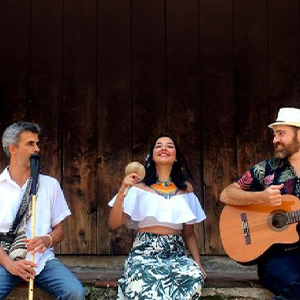
La Pirogue is the vessel of four artists whose hearts beat to the rhythms of Malian, Colombian and Réunionese folklore. La Pirogue presents a spellbinding and energizing concert blending traditional compositions and pieces in Bambara, French, Spanish and Creole. A journey to the heart of an open, multicultural world! A 2014 winner of a Canadian Folk Music Award and an Independent Music Award (USA) for the album “les frontières imaginaires,” composed and recorded in Mali, Romain Malagnoux has carried out several co-creation projects in collaboration with Colombian and African artists. As part of an international tour (France, Colombia, El Salvador), he performed as a duo with the charismatic singer Brenda Diaz (Barranquilla, Colombia) at the Alliance Française in El Salvador. Back in Quebec, where they live, they met the Réunionese multi-instrumentalist Zilien Biret, a member of the Gipsy Kumbia Orchestra, who composes and sings in Creole in the Maloya style. His love of folk music has taken him to Guinea, Mali, Colombia and Eastern Europe, where he learned the Fulani flute, the gaita (Colombian flute) and the clarinet. It all rests on the delicate percussion of Dominique Sherman.
LEARN MORE
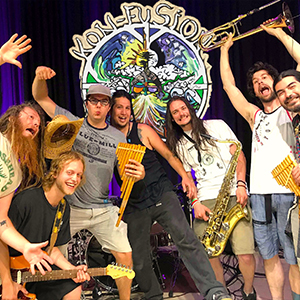
Kon-Fusion makes you vibrate to the sounds of cumbia, ska, funk and rock, all in its own way! Ancestral and traditional rhythms fused with more modern ones, instruments that transcend eras, cultures and borders, socially engaged lyrics… Such is the rich, solid and unique personality of Kon-Fusion! Kon-fusion germinated in 2012 as a creative music workshop of three people of Chilean origin, two of whom are still part of the ensemble, and then, during 2014, the project took shape by developing its style and bringing in other musicians. The lyrics, mostly in Spanish, call for an open mind to the world and for cultivating a critical eye toward the unhealthy institutions of our society. Accompanying Kon-Fusion’s uninhibited and rebellious personality is a whole body of music that is thought out, crafted and delivered with the intention of giving the audience a memorable experience. Armed with a recording and backed by dozens of past performances, Kon-Fusion is ready to burst out in colour wherever Kon-Fusion goes!
LEARN MORE
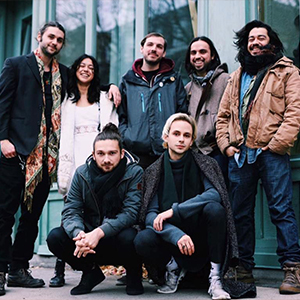
Led by the mixed backgrounds of its singers and their Peruvian roots, El Son Sonó is made up of seven musicians from different musical styles. Over time, they have increasingly honed the musical spirit of Peruvian waltzes through to rumba, crossing over into cumbia, festejo, salsa and jazz.
LEARN MORE
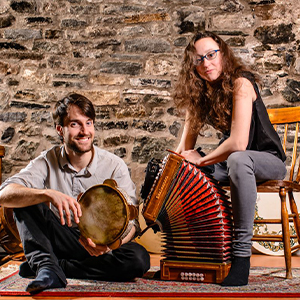
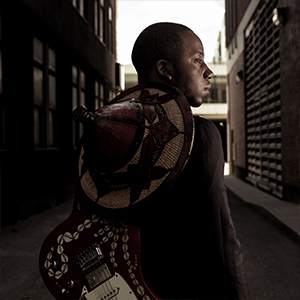
TokaTaNoka is a duo playing mixed-roots music with a strong Basque influence. It is the meeting of Maider Martineau, a multi-instrumentalist and singer from the Basque Country, and Olivier Bussières, a percussionist from Quebec City who specializes in Middle Eastern instruments and the various techniques of the tambourine. The accordion joins forces with the pandero, the alboka with the voice, by way of the frame drum… They play original compositions and customized arrangements of traditional pieces.
LEARN MORE
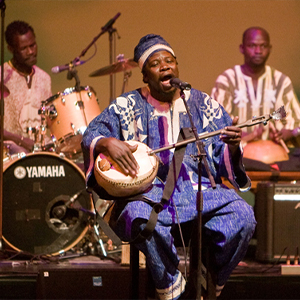
A young singer-songwriter originally from Burkina Faso, he settled in Montreal after a stint in France. He has made his music heard in the streets of Montreal and in the metro. With urban Afropop and reggae sounds in the West African style, Kenzow wants to touch and move as many people as possible, no matter their origins.
LEARN MORE
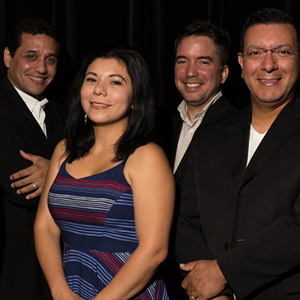
Bonsa Toun’wanzè was born in 1978 in Burkina Faso. Shortly afterward, his family moved to Ghana, where he spent his entire childhood. Around the age of 15, he left Ghana and set out on a long journey that took him to Niger, Togo, Libya and Mauritania, among other places, and finally brought him back to Burkina Faso, his native country. The music he played in his hair salon in Fada would earn him the nickname “R. Kelly.”
It was only in the early 2000s, however, that Bonsa gained a certain notoriety, when he founded the hip-hop duo the “Negramers.” His meeting with the renowned Biri, a master griot and Bissa farmer from Boulgou, proved a turning point in his musical journey. The encounter led him to rediscover the music of home and gave him the opportunity to refine and develop his own technique on the koanni, a traditional two-string percussive Bissa guitar, which would later become his trademark.
The artist chose to pursue his musical research and creation along the path of Burkinabé “tradi-modern,” rooting his compositions in Bissa tradition while keeping the various contemporary influences that make up his musical universe.
LEARN MORE
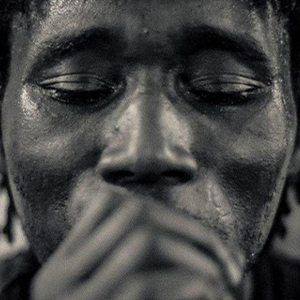
The ensemble InCrescendo, created in 2013 by Edward Maldonado (double bassist and musical director), offers you a musical journey to Venezuela through a sonic canvas depicting festive atmospheres with high doses of energy.
This adventure is enhanced by nostalgic, languorous melodies, sensual and inviting dance, restrained work songs and playful, poetic and romantic lyrics. InCrescendo’s sound is part of a heritage strongly rooted in present-day Latin America, where the most traditional lives alongside the most contemporary, outlining new traditions.
LEARN MORE
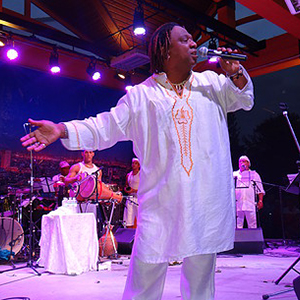
Noubi is an Afro-acoustic trio with warm sounds that doesn’t confine itself to a single musical style. Inspired by traditional West African music, Noubi takes you on a journey through an eclectic universe of pop, reggae, funk and jazz.
Noubi, a mystical voice on cajon and guitar, Vincent Duhaime Perreault on guitar and Carlo Birri on bass, invite you on a journey around an Afro-acoustic repertoire. Seated on his cajon, guitar in hand, Noubi, a singer-songwriter, performs inspirations drawn from everyday life in West Africa, and takes us along the streets of the old continent.
His first steps in art were taken in Saint-Louis with Ndiol’Or Folk. His identity has been nourished by his stage experiences, notably alongside Mino Cinelu (Saint-Louis Jazz Festival), Daby Touré (Festival Afriqu’à Muret) and Pape et Cheikh. The alliance of his guitar and his voice is the essence of his style, which he develops in the group Noubi.
LEARN MORE
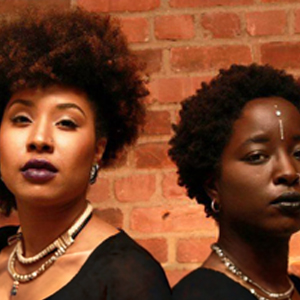
Proyecto Iré came into being in June 2012, answering a desire to celebrate the marriage of African and Cuban culture. The group’s repertoire presents multiple melodies using the key instruments of Afro-Cuban music: tambores and bata. A music that transforms the rhythms of the past into the sounds of today. Oscar’s velvet voice turns each piece into a pure delight for the senses. A music that awakens a Cuban heart in everyone!
LEARN MORE
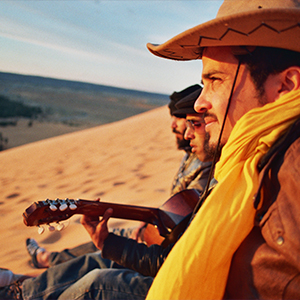
K-Iri is a duo of female singers, two voices harmonizing around their two instruments of choice, a guitar and a violin. The pair, made up of two young women, Sarah-Judith, of Burkinabé origin, and Iri, of Ethiopian origin, met in Montreal in the spring of 2015. Sharing the same desires, they compose music that evokes their origins but also their training, Sarah-Judith coming from the world of classical music and Iri from a self-taught background. Their creations draw their influences as much from the rhythms of ethio-jazz as from contemporary soul, keeping a certain restraint as a guiding principle, in order to move toward pared-down compositions of great strength.
LEARN MORE
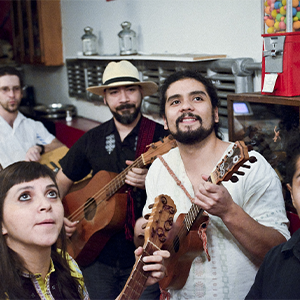
Born from the meeting of musicians from different backgrounds, Nomad Stones is a musical group whose work draws on the major references of Algerian, African and Latin music. With an approach resembling a “travel journal,” Nomad Stones roams across genres and seamlessly blends reggae, chaâbi (Algerian popular music) and Gypsy jazz. In June 2015, the group won the Ali Maachi competition organized by Algeria’s Ministry of Culture.

LEARN MORE
Akawui is a Chilean singer and singer-songwriter. His father introduced him to South American folk music at the age of three. With an Amerindian-Chilean cultural heritage, he draws inspiration from his roots and explores the musicality of this blend. Akawui fuses musical genres such as salsa-cumbi and hip hop, as well as Andean, Afro-Cuban and Brazilian music. He describes his style as music of the Americas that reflects a percussive richness and an electronic punch. Akawui approaches subjects close to him with humour, sarcasm and love. At 15, Akawui was already taking music seriously and studying Brazilian percussion; passionate about Brazilian music, in 2008 he joined a Brazilian music group as a percussionist. In 2010, he took an intensive percussion course in Brazil. On his return, he decided to form his own tropical music group, Banda Aydê, of which he was the lead singer. With this group, he released a single titled Dia de Festa (Party Day), a song in the typical style of the Salvador de Bahia carnivals. Today, Akawui is spreading his wings as a singer who always surrounds himself with musicians of varied origins. Dedicated to sharing the music of the Americas with Quebec audiences, he takes part in musical gatherings such as the Montreal Jazz Festival and the Festival Diversité. Beyond the stage, Akawui cares about young people and uses his artistic talent to work with teens and give them the confidence to persevere, both at school and in life.
LEARN MORE
Los Viejha is a musical ensemble created in Montreal in 2013 by Mexican musicians from very diverse backgrounds, all involved in the study and promotion of Son Jarocho, a traditional Afro-Mexican music. Passionate about the fraternity between Latin American musical roots, Los Viejha seeks to fuse and showcase the festive spirit and the deep, mixed heritage of the music of Mexico and the Americas. The sound of Los Viejha is steeped in history and draws on the very particular multicultural freshness of Montreal.
Caribbean percussion is accompanied by the rhythmic dance of the “Zapateado,” the rhythm and melodies of the traditional guitars, Jarana, Leona and Requinto, as well as the magical harmonies of the harmonica. The group is made up of Eloisa Contreras, Juan Carlos Tanori and Leon Jorge Medina Rangel on “jarana,” Victor Zamudio on guitar, Nicolas Casaubon Hentschel on harmonica and Marino Vazquez on percussion and vocals.
LEARN MORE
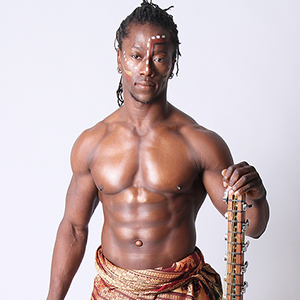
Yamoussa Kora & Thousand Colors explores Afro fusion: a meeting of several flavours, including Afro jazz, Afrobeat, New Age and a little reggae. You’ll find instruments such as the kora, guitar, saxophone and bass guitar, which, together with voices and the djembé (percussion), innovate across different styles. The atmosphere is percussive and, of course, reflects the influences of Guinea and the Soussou people. Yamoussa Bangoura, founder of the group, is a multidisciplinary artist: an acrobat, dancer and musician all in one. He grew up in Guinea, where he took part in Circus Baobab de Conakry shows. He then joined Cirque Eloize, going on numerous international tours, before creating Productions Kalabanté in Montreal, where he is artistic director. The group Yamoussa Kora & Thousand Colors has existed in Montreal since 2013.
LEARN MORE
When the group was founded in 2010 by Gabriel Paquin-Buki, its members were all students at the Université de Montréal and the conservatoire. They truly took off in 2012, after receiving the special mention at the 2014 Syli d’Or World Music Competition.
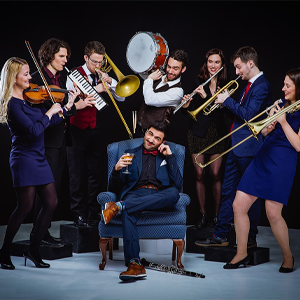
Following this recognition, the group has performed concert after concert across Quebec. Oktopus is eight musicians united in a single project to breathe new life into the traditional music of Eastern Europe. Through an eclectic instrumentation inspired by the Klezmer tradition and innovative arrangements, the octet revisits this repertoire, bringing its own energy and creativity to it. The group wants to keep alive the rich melodies of the itinerant Jewish musicians who, in the course of their travels, borrowed musical themes from all the European traditions (Balkan, Gypsy, etc.).
In its shows, Oktopus conveys the musical culture of Eastern Europe while adding its own spice, through creative arrangements and varied instrumentation. Oktopus has chosen to perpetuate the rich folk tradition of Eastern European countries in rousing performances that are at once festive and melancholy.
LEARN MORE
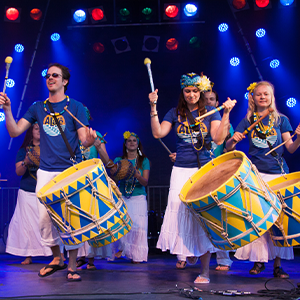
Alayê was born of a shared passion for the traditions of Brazil’s Nordeste, and more precisely the Pernambuco region. The two enthusiasts, Simon and Emilie, needed only a few minutes to set themselves a challenge: to spread the musical traditions of Pernambuco in Montréal. Three years later, bet won! Alayê, which means “the one who possesses life” in Yoruba, is therefore first and foremost the work of Simon Poitras and Emilie Guérette. In 2011, Simon, then a student of Latin percussion at Cégep Saint-Laurent, fell in love with maracatu during a stay in Recife, the capital of the Pernambuco region. Emilie, for her part, returned to Montréal after five years spent between Brazil, Mali and France, where she studied percussion, maracatu in particular. From their meeting and shared passion, Alayê was born.
LEARN MORE
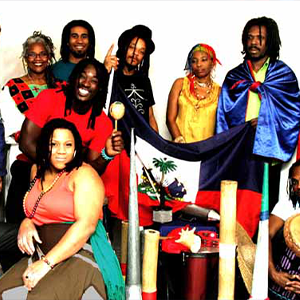
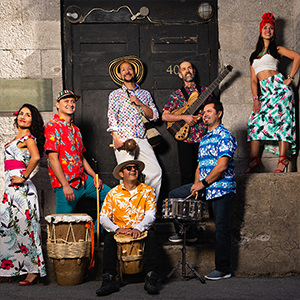
The group Rara Soley, made up of ten musicians and three singers, was formed in Montréal in 2013. Ronald Nazaire, of Haitian origin and a drummer from a father-to-son line of drummers, is its artistic director. The musical ensemble Rara Soley has set itself the primary mission of promoting and preserving traditional Haitian culture. Its goal is to make known, and keep very much alive, the ancestral rhythms and songs that come directly from the vodou tradition. The music of Rara Soley is rich in new sounds, where the tanbou, the vaksin, the graj, the tcha-tcha and voices produce music that touches the soul, creating an electric and therapeutic atmosphere of great intensity, in which ancestral spirits do not hesitate to make themselves known. Rara is a musical style from the traditional Haitian peasantry, rooted in the lakou (sacred courtyards). Rara, like the Haitian people, brings together both African and Amerindian heritage.
LEARN MORE
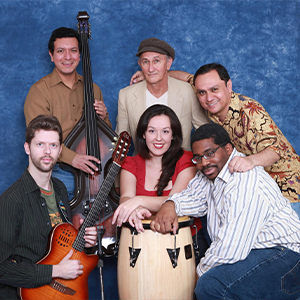
Bumaranga’s motto: to showcase the African roots of Colombian music. With rhythms drawn from several Colombian musical styles (cumbia, puya, tambora, mapalé…), the merry band of Bumaranga lights up stages and sets venues ablaze at every one of their concerts.
At the origin of the group is Juan Sebastián Quirós, a Colombian musician and researcher passionate about the music of his country and about fusions with other styles, such as reggae, rock and electro… Among other things, he instigated a project called Proyecto Disonante in 2011. Created the same year, Bumaranga offers a blend of traditional percussion and flutes, enhanced by a bass and an electric guitar. The band’s name comes from the word that African slaves brought to Colombia used to refer to certain musical ensembles. Today, the group has seven members: Juan Sebastián Quirós on gaita (a traditional flute) and percussion, Jorge Gomes on drum and vocals, Alvaro Cabrera on percussion and millo (another traditional flute), Adam Goulet on electric guitar, Freddy Ramírez on maracas, Mathieu Sénéchal on bass and Stephanie Osorio on vocals. The music that comes from this alloy is both authentic and modern, an invitation to discover Colombian music and appreciate its richness. The African influence is obvious: frenzied rhythms, with percussion at the heart of the compositions. An invitation to travel and to share that it would be a shame to turn down.
LEARN MORE
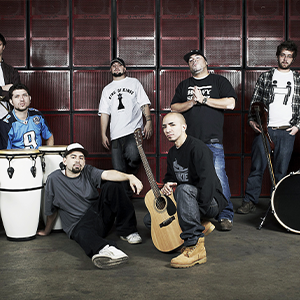
Raices, Caña y Son draws much of its inspiration from the musical and artistic richness of Colombia. Its members, who come from Colombia, Venezuela, Haiti and Quebec, carry a collective project of sharing and passing on the rich musical heritage of South America, with a concern for musical authenticity and creative spontaneity. Lyric soprano Emilia Cordoba lends all the warmth of her voice and her dancing presence to a show that reconciles fans of popular music and traditional South American rhythms.
LEARN MORE
LEARN MORE
Montreal, fall 2006. A bunch of Montrealers, originally from El Salvador, Haiti, Quebec, the Dominican Republic, Peru and Guatemala, decide to come together in an original band. Probably a bit dreamy and crazy, all musicians, all curious about blended musics, their group is called Heavy Soundz. Their recipe: mix salsa, reggae, ska and hip-hop. Since then, they have released an album called Tumba Parlantes (or Break the Speakers) and have performed on stage many times. Come aboard their ship!
LEARN MORE
LEARN MORE
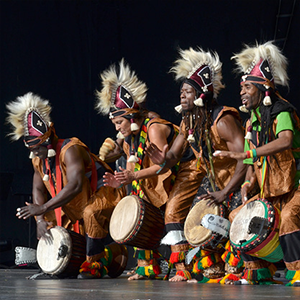
Unity is strength. That is what Benkadi means in the Malinké language, spoken in Guinea-Conakry, Mali, Senegal and Côte d’Ivoire. A fine promise from a group created in May 2011.
At that time, Mohamed Mara Ginola, Lancinet Condé, Sidafa Koïta and Cynthia Morneau decided to come together to share the traditional Malinké music of Hamana, a Mandingue region in Upper Guinea. The first three, all Guinean, had just arrived in Canada. They already knew Cynthia, who is Quebec-Guinean, very well: they had played and danced with her for several years in the same group in Guinea.
Then a fifth member joined the quartet: Mamadou Koita, a balafon player from Burkina Faso. He shares with Mohamed, Lancinet, Sidafa and Cynthia the same passion for the traditional music and dances of Hamana. Finally, in 2012, Benkadi gained two new members: Pascal Gaudette, a Quebecer trained on djembé in Upper Guinea, and Kady Zon, from Burkina Faso, of the prolific Zon family, who adds her feminine touch to the dance and singing. Their shows bring together djembés, doundouns and balafon. On stage, their desire to pass on their culture is palpable and contagious. Winners of the Bronze Syli at the Syli d’Or World Music Competition in 2012, they bring together the energy and talent to take you deep into Guinea, right into the heart of Mandingue country. Come along!
LEARN MORE
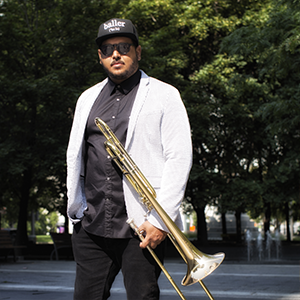
Yordan Martinez is a trombonist from Cuba who stands out for his versatility, creativity and sense of improvisation in his performances, arrangements and compositions. Among his major achievements, in 2000 Yordan joined the group Klimax, led by Giraldo Piloto in Cuba. He recorded the album “Klimax & Friends” and took part in a tour of jazz festivals across Europe. In 2003, Klimax was invited to the Ottawa Bluesfest, and after that trip, Yordan settled in Montréal. In 2008, he graduated from the Faculty of Music of the Université de Montréal in jazz performance. Throughout his studies, he accompanied, among others, Michel Donato, Oliver Jones, Sophie Desmarais and Michel Legrand in concert. In 2011, Yordan Martinez won the Syli d’Or World Music Competition, a springboard organized by Productions Nuits d’Afrique, with his group The Cuban Martinez Show and his original compositions.
LEARN MORE
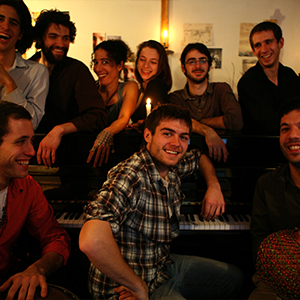
Once upon a time… two brothers and a mutual friend, surrounded by a good gang of musician friends… It all happens in Quebec in 2009. Thomas and Yan Morelli, the two brothers, set out with their friend François-Pierre Poirier on an adventure with a taste of Latin music: samba, chorinho, salsa, rumba… A band with the sweet name Saravà, a word with many meanings, including “farewell.”
Thomas plays trombone, an instrument he learned during his high school music program, and is also in love with the cavaquinho (a small Brazilian guitar) and percussion linked to capoeira: berimbau, atabaque and pandeiro. For three years, he toured with singer and guitarist Paulo Ramos and percussionist Daniel Bellegarde. He then joined Vovo’s percussion school. Today, he has returned to his first love, the trombone.
François-Pierre, for his part, plays piano. Originally from Gaspé, he started taking piano lessons at a very young age. As a teenager, he discovered blues, funk and jazz, and studied jazz piano at Cegep. It was there that he met Thomas and their first collaborations began. Among other things, he took part in the Candela project, a Latin/jazz ensemble supervised by Jean-Pierre Zanella that performed at the Montreal Jazz Festival in 2009. Then came Yan, Thomas’s brother, the arranger and percussionist who completes the founding trio.
Since then, the band has grown. It now has twelve musicians and singers, has turned professional and has played one stage after another in Montreal and elsewhere in Quebec. Their repertoire is a pure return to the roots of Latin music, an invigorating cocktail of sounds and rhythms that smell of sunshine.
LEARN MORE
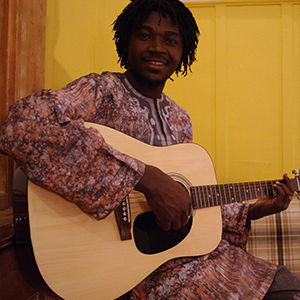
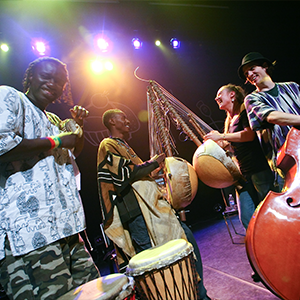
Élété, whose family name is Rimtobaye, is originally from Chad and spent his childhood between Congo-Kinshasa, the Central African Republic, Chad and France. From a very young age, he discovered a passion for music and took up percussion. He also sang in a choir from the age of eight.
It must be said that, in his family, music is a family affair… While he was living in N’Djamena, his brothers Isaac and Israël created the group K’Lana (Hyphen) and invited their brothers and sisters to join them. Élété was part of it. Together, they took their first steps on stage, performing in cafés and cultural centres in several cities across Chad. The group would later take the name Esperanza.
During those years, Élété learned guitar under the guidance of his brother Israël. He then started his own band with several friends, under the name Goskad. At the same time, he began writing his own songs, influenced by artists such as Lokua Kanza and Richard Bona. His style ranges across afrobeat, reggae, Eastern music and acoustic folk.
Settling in Montréal in the 2000s brought him many encounters and enriched his repertoire. He has collaborated with Aboulaye Ndergué, Cheikh and Isabelle Vadeboncoeur. It was with the latter (and Begine Owuo Kebibaya) that he founded the group K’Lana Vibes, which brings together Quebec, Chadian, Ghanaian, Senegalese and Cameroonian musicians.
Élété has been working on the recording of his first solo album, a reflection of a life already so full and of his exceptional influences.
LEARN MORE
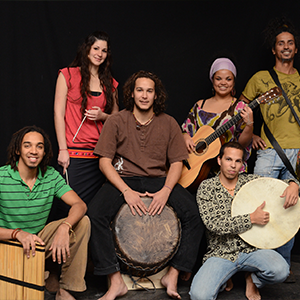
The group Kabakuwo, whose name means “fantastic,” was formed in 2007 by four musicians who are either passionate about Mandinka culture or come from it: Sadio Sissokho (from Senegal) on percussion and vocals, Diely Mori Tounkara (from Mali) on kora and guitar, Cédric Dind-Lavoie (from Quebec) on double bass and electric bass, and Estelle Lavoie (from Quebec) on kora and guitar.
These four artists, all highly experienced in music, mostly African, set themselves the challenge of exploring traditional Mandinka music, or rather of exploring music through Mandinka culture. Alongside traditional pieces, the group’s repertoire includes original compositions by each of the musicians, at times influenced by Eastern scales, Latin and reggae rhythms, but above all by the rhythms of Senegal and Mali. Each of the four musicians plays in various ensembles, but their shared interest in traditional Mandinka music brought them together in Kabakuwo.
Since its formation, the group has already performed many times at festivals such as the Festival Interculturel de Rawdon, the Francofolies de Montréal and the Théâtre de Verdure for Vues d’Afrique…
Together, the four musicians approach each traditional piece with integrity and respect for its origins, but also with the inventiveness and inspiration that such an “airy” instrumentation allows. The double bass and the koras trade roles as accompanists and soloists, supported by the percussion. On other pieces, they join forces to let the griot tell his stories, make his voice heard and sing the Mandinka legends. Kabakuwo is like a journey back to ancestral times, deep in West Africa, but with a sound that is accessible to today’s ears. A blend with beneficial powers, a magic potion that is inexplicable, irrational and yet so sweet. Kabakuwo was named winner of the 4th edition of the Syli d’Or.
LEARN MORE
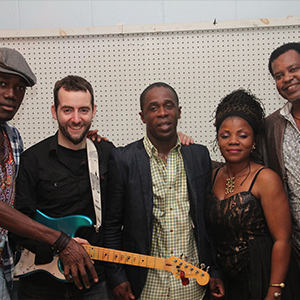
Mayé invites us to travel and escape to the brilliant blue seas surrounding a group of Indian Ocean islands with the poetic name of the Mascarene Islands.
In Réunion Creole, “Mayé” means “mixed” or “blend,” a name particularly well chosen for this Montreal band of seven members brought together by Numa, a footballer, guitarist and singer already well established on the Montreal music scene. All the members of Mayé came together driven by the desire to share their passion for séga and maloya, the traditional musical styles of La Réunion. Maloya, a melody once reserved for Black people and played in the shadows, allowed enslaved people to resist in order to survive. It is at the heart of the “kabars” (gatherings) held on December 20 to commemorate the abolition of slavery on the island in 1848.
Mayé proudly carries this heritage and delights in enriching it with other sounds and other instruments. Their music is a skilful blend of traditional rhythms from La Réunion, Mauritius and Madagascar, combined with contemporary rhythms influenced by their life in Quebec.
In the spring of 2009, the group made its first stage appearances, mainly in Montreal. Their fusion of séga and maloya with more Western sounds is a soothing balm for body and mind, to be consumed without moderation.
LEARN MORE
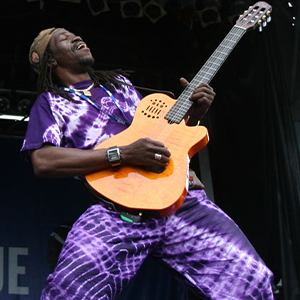
DjiDji was born in the mind of Aristide Gnakalé Sahouo in Montreal, in the middle of March 2007. A native of Côte d’Ivoire, Aristide Gnakalé Sahouo is a bassist. He played the biggest venues in West Africa and accompanied some of the continent’s best-known artists before flying off to Montreal. In Canada, he has continued his career, recording with Jean Leloup and accompanying Gotta Lago, the band Donko, Samajam, François Cossette, Alpha Yaya Diallo… He has played the Montreal International Jazz Festival, Nuits d’Afrique, the Francofolies de Montréal… Alongside this, he teaches bass and traditional percussion.
Shortly after its formation, DjiDji welcomed another essential pillar, William Atchouellou, also from Côte d’Ivoire. A choreographer, dancer and musician, William has roamed from stage to stage in West Africa, Europe, Canada, the United States, Mexico… He was first a member of the Ivorian company Ten Zo, then directed and choreographed the shows of the Kôtou dance ensemble, based in Minneapolis, from 2003 to 2007. He also teaches dance and percussion.
The third member, there from the start: André Dupras. A Canadian, he has been passionate about percussion, and the drums in particular, since the age of 5. A graduate of the Conservatoire royal de Montréal, he has accompanied many artists in the studio and on stage.
Born in Quebec, Sylvain Dupras has also been part of the DjiDji adventure since the beginning. Whether African, Arabic or Hawaiian, no percussion instrument can resist him. And Sylvain has another string to his bow: he also plays guitar.
The most recent arrival in DjiDji, Michael Freed was born in Montreal. A saxophonist and harmonica player, he has travelled through South America, Europe and North Africa, developing his talents as a musician and singer in a variety of fields: blues, African music, jazz, rock… This alliance of such varied worlds, often enriched by other talents, is a wonderful opportunity for music. The Bronze Syli won in 2010 is proof of this success. Clearly, the blend of African rhythms and sounds combined with Western instruments is a recipe that never stops delighting audiences’ ears.
LEARN MORE
The show by Aboulaye Koné and Bolokan Percussions offers top-level rhythmic arrangements while respecting the authenticity of Mandingue villages. Costumed and skilful, the percussionists by turns get hands clapping and set the dancers vibrating in a dialogue, a kind of communication that astonishes. The troupe incorporates the balafon and the tama as well as traditional songs, just as the griots do.
LEARN MORE
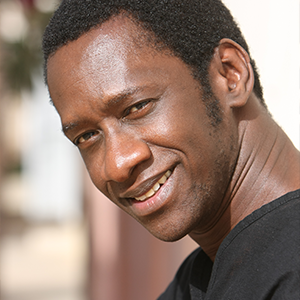
Oumar Ndiaye, better known as Xosluman (pronounced Khoslouman), is part of this new generation of Senegalese musicians with innovative playing and messages. Author, composer and performer, Oumar Ndiaye sings alone with his acoustic guitar or accompanied by a band of musicians.
Serer and Wolof rhythms mixed with melodies from the Fouta make up his musical style, which Oumar has named the african feeling sound.
LEARN MORE
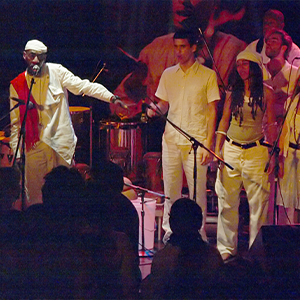
Xlim, always accompanied by outstanding musicians, preaches love for one’s neighbour and acceptance of human beings as they are, with their good and bad sides. He adapts reggae to all the different urban musical styles he has the chance to touch.
Then at the beginning of his reggae career, Xlim amazed more than one crowd with his performances, his music full of expression and colour, and his unique, modern style with a tropical flavour
LEARN MORE
The Brazilian percussion school Estação da Luz was born in Montreal in May 2005, from the alliance of a Brazilian master percussionist, Vovô, and two music professionals, Lucas Tavarez Ferraz and Martin Moreira. Their goal: to recreate the atmosphere of Brazil’s samba schools in Quebec and share the many rhythms of African origin found across the Americas. For while Estação da Luz’s roots clearly lie in Africa, in its magic, the school draws its essence from the whole American continent. The Americas are celebrated at the school through the study and blending of rhythms from Brazil, Cuba, Haiti, Uruguay and Trinidad. The roots of samba are Bantu. This musical style therefore comes from the peoples of Guinea-Bissau, Angola, the Congo, Mozambique and surrounding areas. Estação da Luz is inspired by the interpretations of the Afro-Brazilian basin of northeastern Brazil, Vovô’s homeland. Students at Estação da Luz thus learn numerous percussion instrument techniques with Vovô. But the school also regularly welcomes specialized guests for seminars, giving its students the assurance of being open to other techniques and other cultures. The association has three components. The first is training percussionists in the samba tradition, musicians able to understand and embody the spirit of this style so they can play as a group and in front of an audience. The second has a social reach through workshops for young and not-so-young people from all walks of life. Finally, the third aspect of Estação da Luz is a troupe working on original compositions by Vovô. From the start, the school enjoyed great success and was in high demand. It takes part in numerous events in Montreal and elsewhere in Quebec. In 2008, it received a crowning achievement when it was awarded the Syli d’Or for world music, presented by Nuits d’Afrique.
LEARN MORE
The show by Aboulaye Koné and Bolokan Percussions offers high-level rhythmic arrangements while respecting the authenticity of Mandinka villages. Costumed and skilled, the percussionists have the audience clapping one moment and the dancers vibrating the next, in a dialogue, a kind of communication that astonishes. The troupe incorporates the balafon and the tama as well as traditional songs, just as the griots do.
LEARN MORE
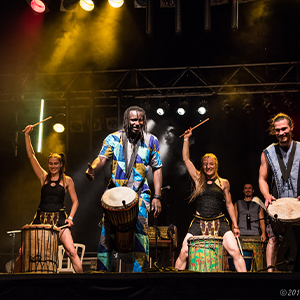
Born in Dinguiraye, Guinea, Alpha Thiam comes from Toucouleur nobility, one of the peoples of the Peul ethnic group, for whom music is traditionally reserved for members of the “nyamakala” (griot) caste. So it was without his family’s knowledge that he began learning guitar, singing and West African folklore from a very young age.
In the early 1960s, he moved to Mali to perfect his craft and develop his musical abilities in complete freedom, becoming a member of the Orchestre Oranam of the U. N. T. M (Union Nationale des Travailleurs Maliens). There he accompanied renowned artists such as Laba Sosseh (of the group Africando), Kélétigui Diabaté (balafon player for Habib Koïté) and Baba Léo Keïta (a drummer of great repute in Mali). He also founded his own group there, the Sofas, and from their many tours in Senegal, Côte d’Ivoire, Liberia and Burkina Faso, he drew on a wide variety of repertoires and musical styles.
Arriving in Montréal in June 2005, Alpha Thiam, Nathalie Dussault on kora, Cédric Dind-Lavoie on bass and double bass, and Moïse Matey on percussion joined their talents to form the “Groupe Alpha Thiam.” The group won the Bronze trophy at the second edition of the Syli d’Or World Music Competition, in recognition of the high quality of its performance.
Having played the kora for more than 20 years and made repeated study trips to Africa, Nathalie Dussault has specialized in the African music repertoire alongside singers Lilison and Youssou Seck, as well as with the band Takadja, 1996 Juno Award recipient. Nathalie has also contributed to several albums and worked with numerous artists, including Diane Dufresne, Cirque du Soleil, the group Malade Mantra, Sébastien Lacombe, the Chango Family, Free Worm, Claire Pelletier and Paul Horn.
Playing the violin since the age of six, Cédric was for years a member of the Chorale des Petits Chanteurs du Mont-Royal. Holding a DEC (college diploma) in jazz bass and arranging, he has also learned piano, accordion, flutes and percussion. A founding member of the collective La Galère, for which he composes, sings and plays bass, he has worked with Perdu l’Nord, Oztara, Dobacaracol, Senaya, Syncop, Manouche, Lara, Sara Rénélik and Juan Sebastian Larobina. His deep love of West African cultures has also led him to accompany Prince Diabaté, Balla Tounkara and Lilison DiKinara.
Of Togolese origin, Moïse set his sights on percussion and dance as a small child. A former member of numerous troupes, including Afro-roots and Safari, he has also taught at two international schools in Cotonou and accompanied singers Soum Bil and Didier Bilé on their tours. Based in Quebec since 2005, he joined the collective Nomadic Massive and is one of the founding members and the percussionist of the Groupe Alpha Thiam. Moïse, who also plays calabash, djembé, congas, bongos, cajón, darbuka and woudou, and who turns his hand ingeniously to a variety of musical styles such as jazz, rock and pop, also gives workshops in schools. He was selected after auditioning for Cirque du Soleil.
LEARN MORE
United by the same passion for West African rhythms, the members of Taafé Fanga offer, through their shows, a unique moment where music and dance blend into one. Inspired by their travels, experiences and encounters, the members of the troupe redefine and adapt this language in their own image, in a contemporary, urban way, while respecting the West African traditions that inspire them.
Known for its dynamic and impressive performances, Taafé Fanga has shone on the stages of numerous dance and world music festivals across Quebec for about fifteen years. Its album Tamala, produced by Senegalese artist Élage Diouf, was released in 2012. First prize winner of the Syli d’Or World Music Competition in 2007, the group notably opened for the famous Youssou N’Dour at the Olympia as part of the Festival Nuits d’Afrique.
Taafé Fanga received a Canada Council for the Arts grant for the recording of the album Tamala. Several members have also received Canada Council for the Arts grants individually to perfect their art. For its work and determination, Taafé Fanga won first prize at the 2007 Syli d’Or World Music Competition organized by Productions Nuits d’Afrique, as well as the Fondation du Maire de Montréal pour la jeunesse grant for the production of its first show at the Cabaret du Musée juste pour rire.
LEARN MORE
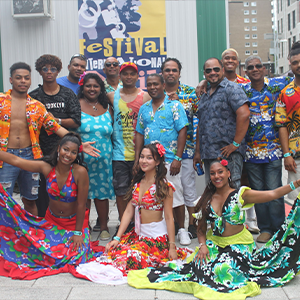
Ancestral or ingeniously reinvented with bursts of reggae and soca, they spread their “Passion Séga” over the crowd, the euphoria of magnetic music and dance.
LEARN MORE
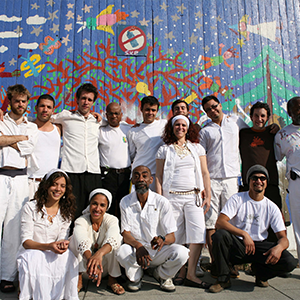
Five Montreal musicians came together to share their passion and to develop and innovate a fusion style. A distinctive music that combines traditional Caribbean music, classical music and jazz. The term MAKAYA refers to the name of one of the highest mountains in Haiti, but also to that of a famous maroon during the colonial period.